


Why Historical Context Changes Everything
Many SEO reports focus on recent performance metrics without explaining the underlying causes. Rankings shift, and traffic fluctuates, but without historical context, those changes lack real meaning.
Semrush historical data adds perspective. By reviewing ranking history, backlink trends, and Search Engine Results Pages (SERPs) visibility across defined periods, we can interpret shifts rather than react to them.
Semrush outlines several ways to use historical data in its guide to historical SEO analysis, from reviewing ranking history to comparing competitors and diagnosing traffic drops. At Activate Digital Media, we use that foundation to move beyond reporting and into strategic decision-making.
credit-Semrush
Keyword Trends Reveal True Performance Over Time
Keyword performance becomes clearer when analyzed across reporting periods. Using Semrush tools like Keyword Overview and Position Tracking, we assess visibility patterns and competitive shifts over time.
With Semrush, we can:
- Research keywords based on search volume and intent
- Evaluate keyword difficulty and competition
- Track historical rankings
- Compare competitor performance
- Identify sustained trends that shape targeted strategies
Evaluating Historical Performance in Keyword Overview
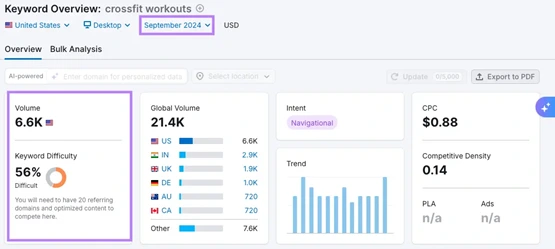
In Keyword Overview, historical performance is assessed by adjusting the date range to analyze search volume trends, ranking movement, and keyword difficulty over time.
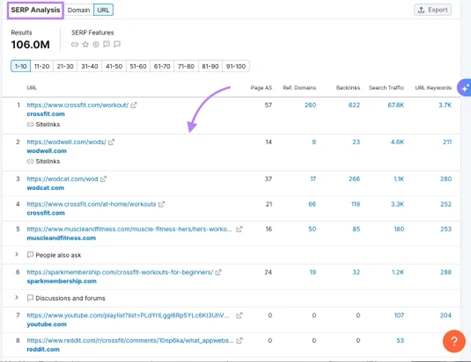
The SERP Analysis section provides additional context by revealing ranking pages, content structure, subtopics, and freshness signals that influence visibility shifts.
credit-Semrush
Together, these views provide both historical trend data and real-time competitive context. By analyzing historical keyword data alongside current SERP results, we can determine whether changes stem from content updates, increased competition, or broader search engine shifts.
Key indicators include:
- Traffic impact on core and pillar pages
- Competitor visibility across keyword clusters
- Influence of SERP features (e.g., featured snippets)
- Growth or volatility during the selected period
Aligning Keyword Movement with Business Goals
A keyword only matters if it supports measurable business outcomes. Using Semrush keyword research and the Keyword Magic Tool, we identify terms aligned with user intent and high-value service pages, not just search volume.
Keyword clusters are then organized into structured content plans that support pillar pages and related assets. This ensures visibility growth aligns with:
- Revenue-driving services
- Conversion-focused pages
- Long-term content strategy
By comparing rankings with traffic and conversion data, our SEO services prioritize keywords that contribute to real business performance, not vanity metrics.
Understanding Traffic Changes Through Analysis
Traffic movement requires interpretation beyond surface-level metrics. Using Semrush Domain Overview and Organic Research reports, we evaluate visibility patterns and competitive shifts across consistent reporting periods.
Reviewing data over several months helps determine whether changes are driven by seasonality, competitive activity, or broader search engine algorithm updates. This analysis supports informed adjustments within our SEO and local SEO services.
To ensure accurate evaluation, we examine:
- Organic rankings and visibility trends over the same timeframe
- Stability of core service pages and targeted keywords
- Competitor performance within similar markets
- SERP feature changes that influence click behavior
Backlink History and Performance Trends as Competitive Intelligence
Backlinks remain a key ranking factor, but total link counts alone rarely provide meaningful insight. With Semrush Backlink Analytics, we review link-acquisition trends, referring-domain growth, and authority shifts across competitors.
Instead of focusing solely on volume, we examine how changes in backlink profiles connect to organic rankings and competitive positioning. This is to identify sustained authority growth, targeted outreach activity, and potential visibility risks.
Our backlink evaluation includes:
- Backlink growth across defined date ranges
- Referring to domain gains and losses
- Authority score changes among competitors.
- Sudden link spikes indicating campaigns or outreach
- Alignment between new backlinks and ranking improvements
- Link losses that may affect visibility
credit-Semrush
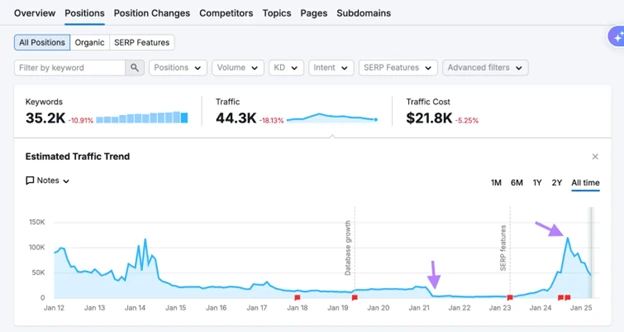
The chart shows long-term traffic trends. When analyzed alongside backlink data, visibility spikes or declines may reflect the impact of link acquisition and changes in authority on organic rankings.
Evaluating Link Growth and Competitive Surges
Steady backlink growth often supports stronger rankings and content stability, while sudden spikes may indicate targeted outreach or strategic campaigns. By reviewing historical backlink data, we identify how competitors build authority and expand their visibility.
We analyze:
- Domain growth across reporting periods
- Alignment between backlink gains and keyword rankings
- Differences in link acquisition pace among competitors
- Lost links that may affect search visibility
- Expansion of keyword clusters tied to new backlinks
- Overlap between link growth and emerging search presence
This approach helps uncover when competitors intensify initiatives and how link acquisition supports their broader SEO strategy.
Year-over-Year SEO Analysis for Meaningful Measurement
Compared to month-to-month reporting, year-over-year analysis offers a more reliable benchmark for evaluating SEO investment and competitive positioning.
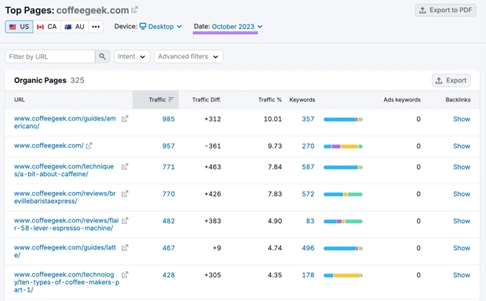
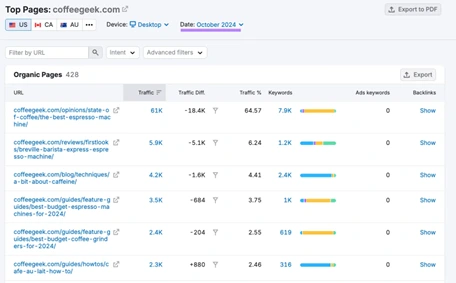
We use Semrush Organic Research and Keyword Gap reports to compare identical date ranges and measure sustained visibility growth. This comparison highlights trends in keyword expansion, content performance, and ranking stability.
Key factors reviewed include:
- Total ranking keywords
- Stability of high-performing pages
- Traffic tied to visibility gains
- Competitive shifts within target markets
credit-Semrush
credit-Semrush
Turning Historical Gaps into Investment Decisions
The Semrush keyword gap tool helps identify keywords where competitors rank, but a website does not. When viewed historically, these gaps highlight differences in content strategies and reveal where to focus future development.
By combining Semrush keyword research with the keyword strategy builder, targeted keyword clusters are organized into structured pillar pages and supporting content. This refines content strategies, aligns with search intent, and supports measurable growth.
Forecasting Content Opportunities with Historical Keyword Gaps
Content forecasting improves when guided by proven keyword demand and identifiable competitive gaps. Using Semrush trend analysis and the Keyword Magic Tool, we identify opportunities backed by consistent search behavior.
Rather than reacting to temporary fluctuations, we focus on long-term patterns to guide data-driven content strategies.
Identifying Emerging Keyword Clusters
Semrush helps us filter keyword groups with consistent growth and strong user intent. By analyzing competitors’ historical performance, we uncover clusters that drive traffic to high-value pages.
We analyze:
- Historical search volume trends
- Ranking and visibility changes
- SERP structure and feature shifts
- Consistent growth across keyword groups
- Demand signals beyond short-term spikes
Turning Historical Data into Strategic Advantage
Semrush historical data adds deeper insight into performance shifts and competitive movement. By combining keyword research, backlink analysis, traffic insights, and performance tracking, we turn data into actionable SEO decisions that drive measurable growth.
Need help transforming search data into a clear strategy? We use Semrush across SEO, local SEO, content, and analytics to support targeted improvements and long-term results.
Contact us today to build a smarter SEO strategy backed by real data.
Frequently Asked Questions
We select date ranges based on business goals, seasonality, and competitive shifts. Reviewing 12 to 24 months of data typically provides enough insight to evaluate performance trends and refine keyword strategy with greater accuracy.
We go beyond tracking rankings. At Activate Digital Media, we use Semrush to analyze search volume, keyword difficulty, competition, and historical trends to guide strategic decisions.
We compare performance against competitors during the same timeframe in Semrush. If multiple sites experience similar visibility changes, it’s likely due to broader search engine updates rather than isolated content issues.
It supports both. We use it to evaluate existing page performance and identify opportunities to strengthen content and adapt to evolving search intent.
It reveals sustained trends in rankings, traffic patterns, and SERP features, helping us refine strategy, allocate resources effectively, and drive measurable growth.
Ready to Grow Your Business?
Contact us to work with a result-driven digital marketing agency. Are you ready to take your business and online marketing to the next level.
Get Your Free Marketing Plan →