


Why Ad Language Matters for Home Services
A plumbing company serving English- and Spanish-speaking homeowners can no longer rely on campaign language settings to reach both audiences through Google Search ads.
Google began rolling out changes in late September 2026. Under the updated system, Search ads match using ad and landing page language alongside signals about the languages users understand.
For home service businesses, this makes Spanish-language ads, relevant landing pages, and accessible customer support important considerations.
Activate Digital Media helps businesses navigate these changes through strategic Google Ads management, campaign optimization, and advertising strategies focused on generating qualified service inquiries.
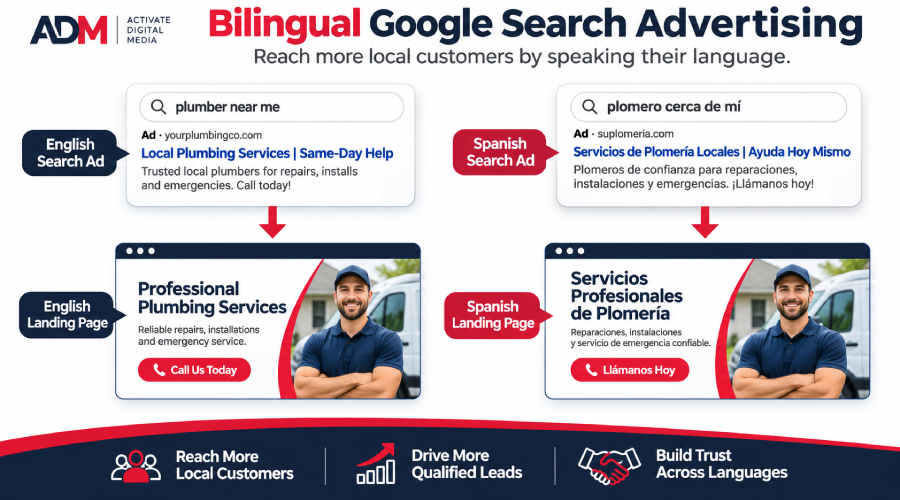
Google's September 2026 Language Targeting Update
On August 13, 2026, Google announced changes to Google Ads language targeting, with implementation beginning in late September. The rollout removes campaign-level language settings from Search campaigns, including those using AI Max for Search.
Campaign-Level Language Settings Are Being Removed
Previously, advertisers could select which languages to target in their Search campaigns. Now, Google automatically decides which ad language to show based on the customer's search and other language information.
Google Search Ads Now Use Automated Language Matching
According to Google Ads Help, language matching considers:
- Search language: The language customers use when searching.
- Customer language preferences: Other languages customers may speak or understand.
- Ad and website language: The language used in the advertisement and the page customers visit after clicking.
When eligible ads are available in multiple languages, Google prioritizes the ad and landing page that match the search term's language. Someone searching in Spanish may still see an English ad if Google determines they understand English.
The Impact of Language Matching on Performance Max
The September 2026 update also affects Performance Max campaigns, but the changes depend on where your ads appear.
Language Matching on Google Search
Performance Max ads appearing on Google Search follow the updated automated language-matching system. Campaign-level language settings no longer control language matching for these placements.
Language Settings on Other Google Channels
Language settings continue to apply to other Performance Max placements, including:
- YouTube
- Google Display Network
- Discover
- Gmail
Shopping ads within Performance Max are not affected by campaign language settings.
What This Means for Bilingual Markets
For home service businesses serving bilingual communities, the update makes it important to consider both the language of their ads and how customers communicate with the business.
Spanish-Language Searches Need Relevant Ads
A homeowner searching “Reparación de aire acondicionado cerca de mí” (“Air conditioning repair near me”) is looking for a local HVAC company.
For HVAC businesses serving Spanish-speaking homeowners, having Spanish-language ads available can make their services easier to understand. However, operating in a bilingual market does not guarantee that Google will display an ad in Spanish.
The Customer Experience Must Continue After the Click
Even when a Spanish-language ad reaches the right customer, the experience can feel inconsistent if:
- The landing page is in English only, despite the customer engaging with an ad in Spanish.
- Service details and booking options are unavailable in Spanish, limiting customers' ability to continue in their preferred language.
- Spanish-language support is unavailable, leaving customers without the option to discuss their service needs in Spanish.
Reaching Spanish-speaking homeowners involves more than displaying an ad. Providing consistent language options throughout the customer journey can make it easier for customers to connect with your business.
4 Steps to Prepare Spanish-Language Ads
Google's update does not require businesses to rebuild existing Search campaigns. However, home service companies targeting Spanish-speaking customers should review their ads, landing pages, and customer support.
1. Organize Ads by Language
Keep English and Spanish advertising organized so each audience receives relevant messaging.
- Create dedicated Spanish-language ad groups where appropriate.
- Consider separate campaigns if you need independent budgets and reporting.
- Keep the structure manageable.
Separate campaigns are optional, not a Google requirement.
2. Write Spanish Ads That Reflect Customer Needs
Use natural, service-specific language rather than relying on direct translations.
For example:
- English: Emergency Plumbing Repair
- Spanish: Reparación de Plomería de Emergencia
Have fluent Spanish speakers review the wording for regional familiarity, accuracy, and alignment with your actual services.
3. Connect Spanish Ads to Relevant Landing Pages
Your Spanish-language landing pages should provide:
- Accurate service descriptions and coverage areas.
- Clear contact information.
- Spanish-language calls to action.
- Straightforward booking or inquiry instructions.
Ensure the page matches the advertised service rather than directing customers to an unrelated English-only page.
4. Prepare Your Team for Spanish-Language Inquiries
Before launching Spanish-language ads:
- Confirm that staff can assist customers in Spanish.
- Arrange call routing to Spanish-speaking representatives when available.
- Prepare to respond to Spanish-language form submissions.
Only advertise language support your business can provide.
A successful bilingual advertising setup should make it convenient for customers to inquire about services in their preferred language.
Key Performance Indicators for Bilingual Campaigns
Tracking the right metrics helps determine which campaigns deserve continued investment.
Monitor these five metrics:
- Search term relevance: Are available search terms related to the services you offer?
- Conversion rate: How often do ad clicks result in tracked calls or form submissions?
- Cost per qualified lead: How much are you spending to attract a potential customer with a relevant service need?
- Lead quality: Are inquiries coming from customers seeking services you provide?
- Booked appointments: How many qualified leads become scheduled jobs?
Separate campaigns can simplify language-specific reporting. However, they cannot guarantee that every lead originated from a Spanish-language search.
Focus on qualified inquiries and booked services, not language or traffic volume alone.
Google Ads Management for Bilingual Markets
Google's updated language matching adds another consideration for home service businesses advertising in bilingual markets. The challenge is determining whether campaigns are attracting customers who actually need their services.
Activate Digital Media addresses this through Google Ads management focused on campaign performance and lead quality.
For example, an HVAC company serving a bilingual community needs to understand:
- Search relevance: Which searches generate legitimate HVAC repair inquiries?
- Local demand: Which service areas produce qualified leads?
- Budget efficiency: Which campaigns deliver valuable inquiries at a reasonable cost?
Our team uses search term analysis, campaign data, and ongoing optimization to guide these decisions.
With experience in home services marketing, we help businesses make informed advertising decisions based on customer demand and measurable results.
Keep the Customer Experience Clear
Google's updated language matching changes how Search ads reach customers, but the importance of clear communication remains the same.
For home service businesses serving bilingual communities, effective advertising means considering the customer's experience beyond the initial search.
Relevant ads, accessible service information, and responsive customer support can make it easier for homeowners to evaluate their options and request services.
Frequently Asked Questions
No. Google states that existing Search campaigns can continue running without changes. However, businesses serving bilingual communities should review their ads and landing pages to ensure they support their intended audiences.
Yes. Google considers the languages a user may understand, not just the language of their search. Someone searching in Spanish may still see an English advertisement.
Yes. Geographic targeting remains available. You can select cities, ZIP codes, or other supported locations relevant to your service area. However, location targeting does not guarantee that ads will appear in a particular language.
No. The language-targeting update does not automatically translate every English ad. Some Google Ads features can generate or adapt advertising content separately, so review any automatically created assets for accuracy.
Under the updated Search system, campaign-level language exclusions are unavailable. Write ads and landing pages in the languages your business can support. Location targeting still controls geography, but it is not a way to exclude people based on the languages they speak.
Review Your Google Ads Strategy
Are your Google Ads campaigns keeping up with Google's latest language-targeting changes?
Activate Digital Media helps home service businesses evaluate campaign performance, improve advertising relevance, and identify opportunities to attract qualified leads. If you serve English- and Spanish-speaking communities, understanding how your current campaigns perform is an important starting point.
Talk to Our Team about your Google Ads strategy and opportunities to improve results.
Ready to Grow Your Business?
Contact us to work with a result-driven digital marketing agency. Are you ready to take your business and online marketing to the next level.
Get Your Free Marketing Plan →